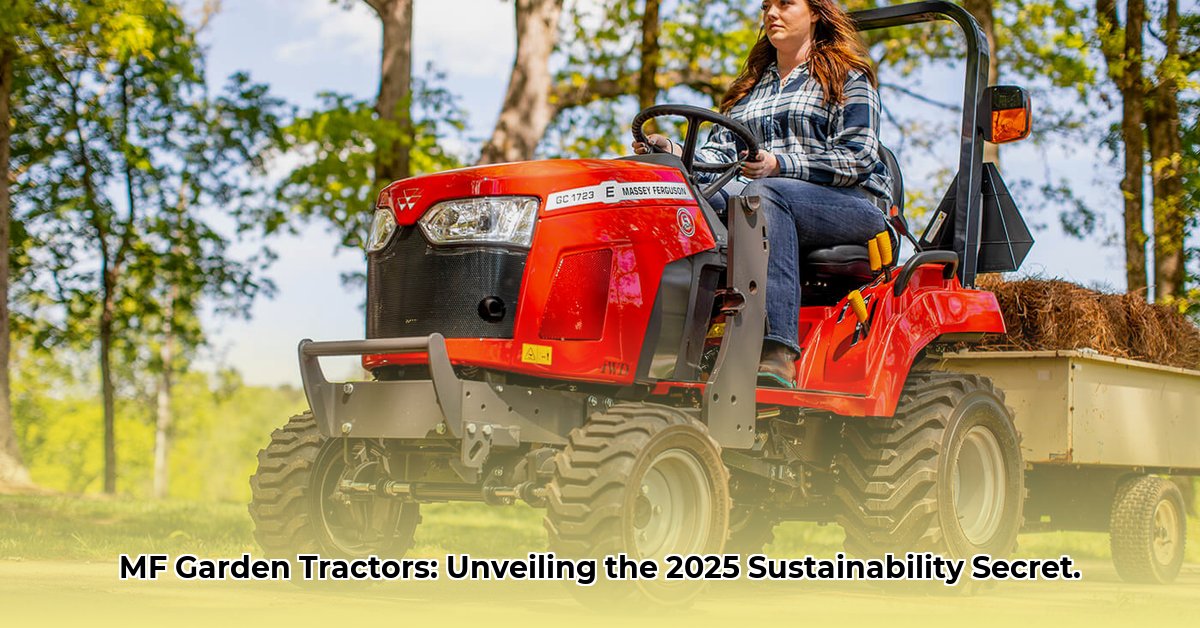
While Massey Ferguson (MF) ceased garden tractor production in 2017, its commitment to sustainable agriculture remains a key strategic focus. This report analyzes MF's shift towards larger-scale farming equipment and its implications for environmental sustainability, market dynamics, and stakeholder interests.
MF's Strategic Pivot: From Home Gardens to Large-Scale Farms
Massey Ferguson's exit from the garden tractor market represents a significant strategic realignment. The company is now concentrating on machinery for large-scale agricultural operations. This shift, while seemingly drastic, reflects a calculated move towards higher-profitability segments and increased efficiency gains within the agricultural technology sector. The company's continued investment in smaller tractors, triple-mowers, and hay balers underscores this focused strategy. They're concentrating resources on equipment crucial for large-scale farming operations. How has this shift impacted the company's overall sustainability initiatives?
Sustainability: Beyond Marketing Claims
Massey Ferguson actively promotes its commitment to environmentally friendly farming practices, notably through its "Sowing Good Deeds" program. However, a critical assessment requires concrete evidence of the environmental impact of its machinery. Without transparent, quantifiable data on key metrics such as emissions reductions and resource consumption, evaluating the true "greenness" of their products remains challenging. Enhanced transparency in reporting is crucial for building consumer trust and solidifying the company's ecological credentials. What specific metrics are utilized to track progress, and how can the reporting process be improved to enhance this transparency?
Stakeholder Perspectives and Objectives
The success of Massey Ferguson's sustainability initiatives hinges on aligning the objectives of various stakeholders. Their short-term and long-term goals are outlined below:
| Stakeholder | Short-Term Goals | Long-Term Goals |
|---|---|---|
| Massey Ferguson | Optimize smaller tractor performance; conduct thorough market analysis | Invest in sustainable technologies (e.g., electric tractors); expand data-driven services for farmers |
| Farmers/Producers | Evaluate new equipment; enhance operational efficiency | Adopt precision farming; leverage government support programs; enhance farming skills |
| Investors | Monitor financial performance and growth prospects | Assess long-term sustainability; analyze risks; verify responsible environmental practices |
| Regulators/Policy Makers | Evaluate the environmental impact of farm equipment | Develop supportive policies; establish efficiency standards |
Assessing Massey Ferguson's Sustainability Initiatives: A Risk-Reward Analysis
Massey Ferguson faces both opportunities and challenges in its pursuit of sustainable agriculture. The following table assesses the likelihood of success and the potential impact of key initiatives:
| Initiative | Probability of Success | Impact | Key Success Factors |
|---|---|---|---|
| Expanding Smaller Tractor Sales | High | High | Continuous market research; adaptable product design. |
| Triple Mower Technology | High | Moderate | User-friendliness; robust build quality; efficient maintenance. |
| Double Small Square Baler | High | Moderate | Efficient distribution; comprehensive customer support. |
| Transitioning to Electric Tractors | Moderate | High | Secure funding; strategic partnerships. |
| Data-Driven Precision Farming | Moderate | High | Data security; user-friendly interfaces. |
Regulatory Landscape and Future Outlook
Government regulations significantly impact Massey Ferguson's sustainability efforts. Compliance with evolving emission standards is paramount. Proactive collaboration with regulators is crucial for long-term success and maintaining market competitiveness. How are they adapting to the changing regulatory scenario?
Measuring Environmental Impact: Beyond ISO 14001 Certification
Massey Ferguson's commitment to sustainable agriculture is exemplified by its ISO 14001 certification for its Beauvais, France facility (January 2024). This certification validates its Environmental Management System (EMS), demonstrating a commitment to minimizing its environmental impact through improved water usage, waste management, energy efficiency, and emissions reduction. However, the absence of publicly available, specific numerical targets for emission reductions and detailed resource consumption metrics necessitates a call for greater transparency in future reporting. This includes providing a holistic view across its entire supply chain.
Key Takeaways:
- Massey Ferguson's ISO 14001 certification underscores its commitment to environmental management.
- The company's sustainability strategy extends beyond certification, but requires enhanced public reporting.
- Long-term success necessitates transparency, continuous EMS improvements, and robust stakeholder engagement.
- Integrating sustainability across the entire supply chain is crucial for future success.